Is your land suitable for Agri-PV?

Free analysis in 2 minutes

Call
Email
Book appointment

We use cookies to give you the best possible experience.

Fläche analysieren
DoppelErnte
Agri-PVServicesProjectsAbout UsKnowledgeCareersContact
/
/
Agri-PV
Services
Projects
About Us
Knowledge
Careers
Contact
DoppelErnte logo

The DoppelErnte Method — Agri-PV with substance.

Navigation

Agri-PVServicesProjectsAbout UsKnowledgeGlossaryCareersContact

Legal

ImprintPrivacy PolicyGlossary

Newsletter

Agri-PV insights straight to your inbox.

© 2026 DoppelErnte GmbH. All rights reserved.

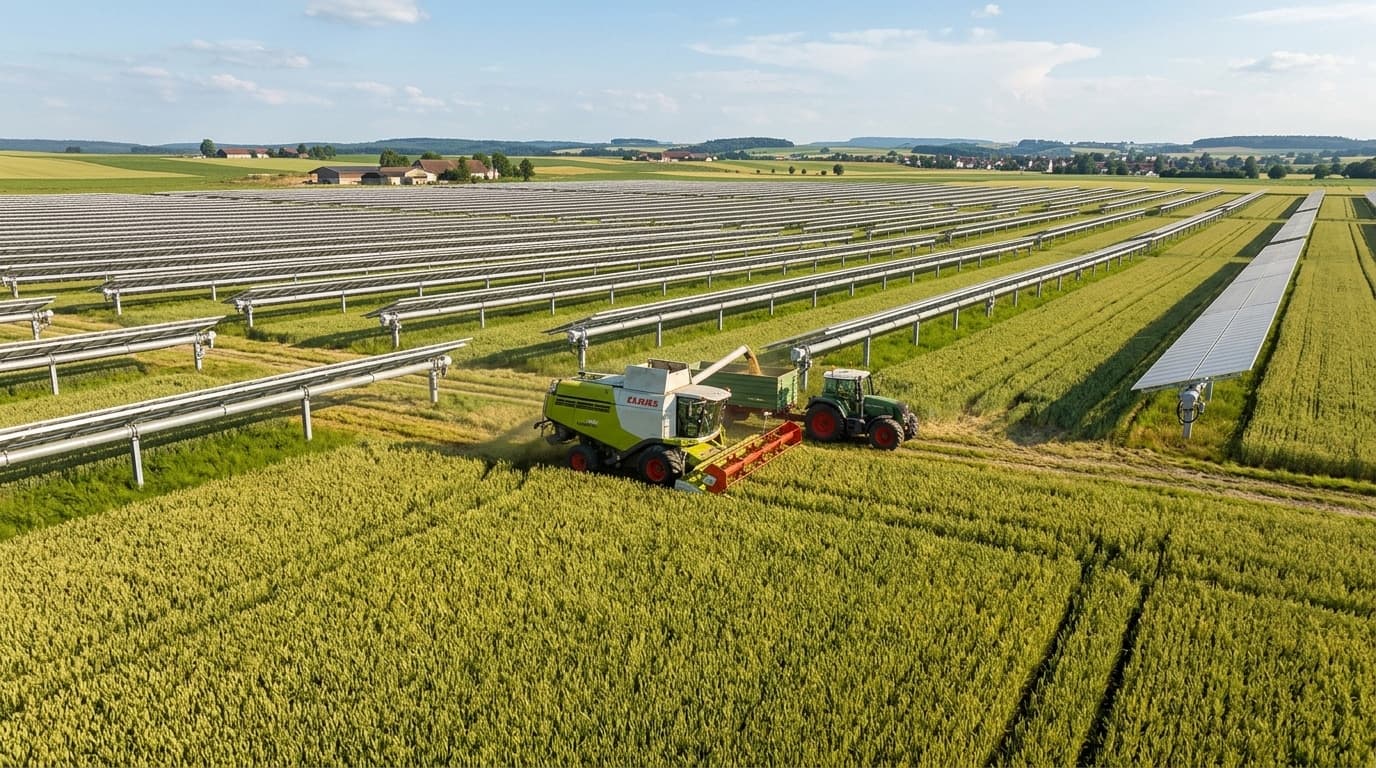
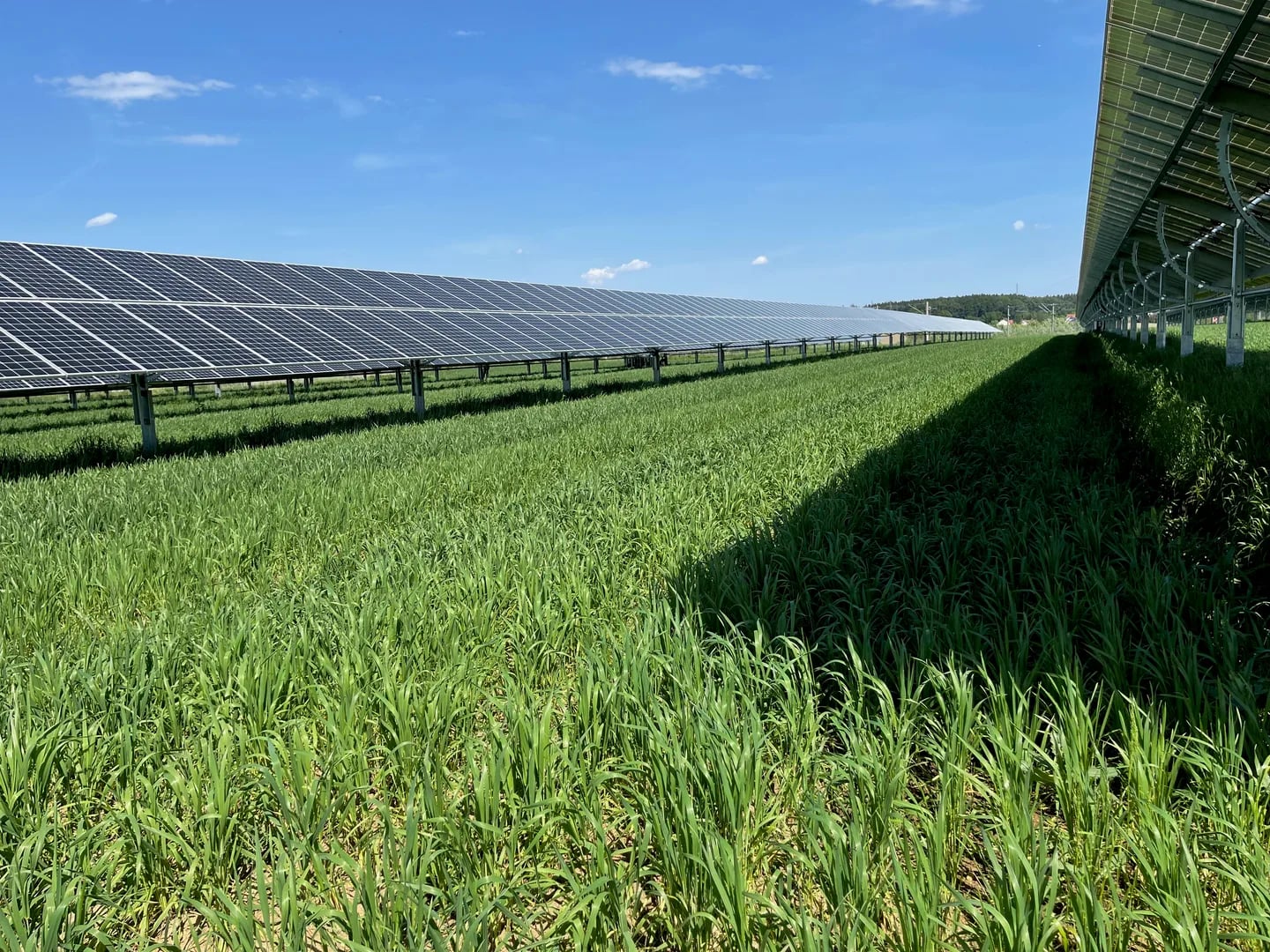
Close-up of cereal plants next to Agri-PV solar panels

Knowledge Hub

Understanding Agri-PV

Expert knowledge, frequently asked questions and practical resources – everything about Agri-PV explained clearly.

EUR 60,000–80,000

Revenue per hectare

up to 85 %

Funding possible

8–12 years

Payback period

Hail · Frost · Heat

Protective effect

8–12 months

Project duration

30× faster

Assessment

Explore topics

Pick a topic that interests you — or scroll down to our frequently asked questions.

Agri-PV Basics

What is Agri-Photovoltaics? How does dual land use work? All the basics explained simply.

Learn more

Costs & Economics

Frequently asked questions about Agri-PV

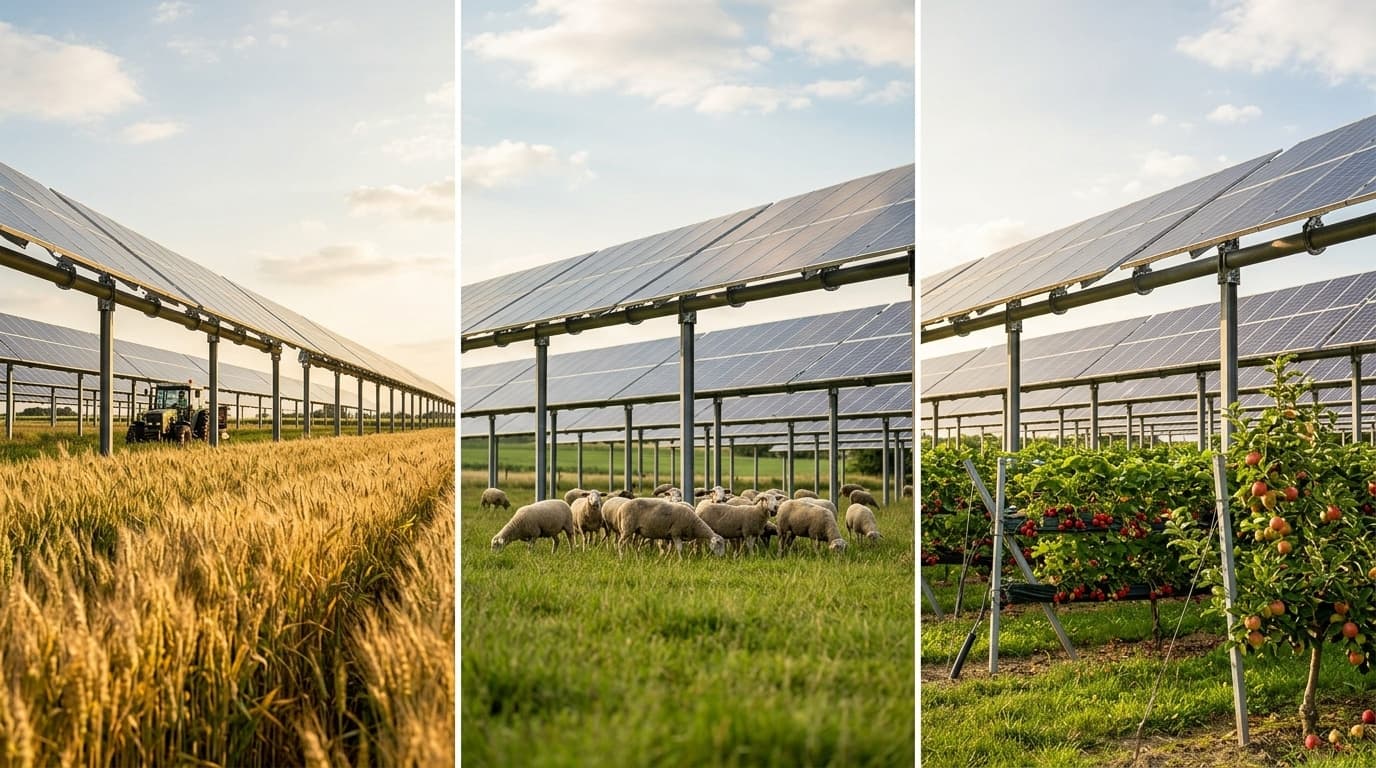
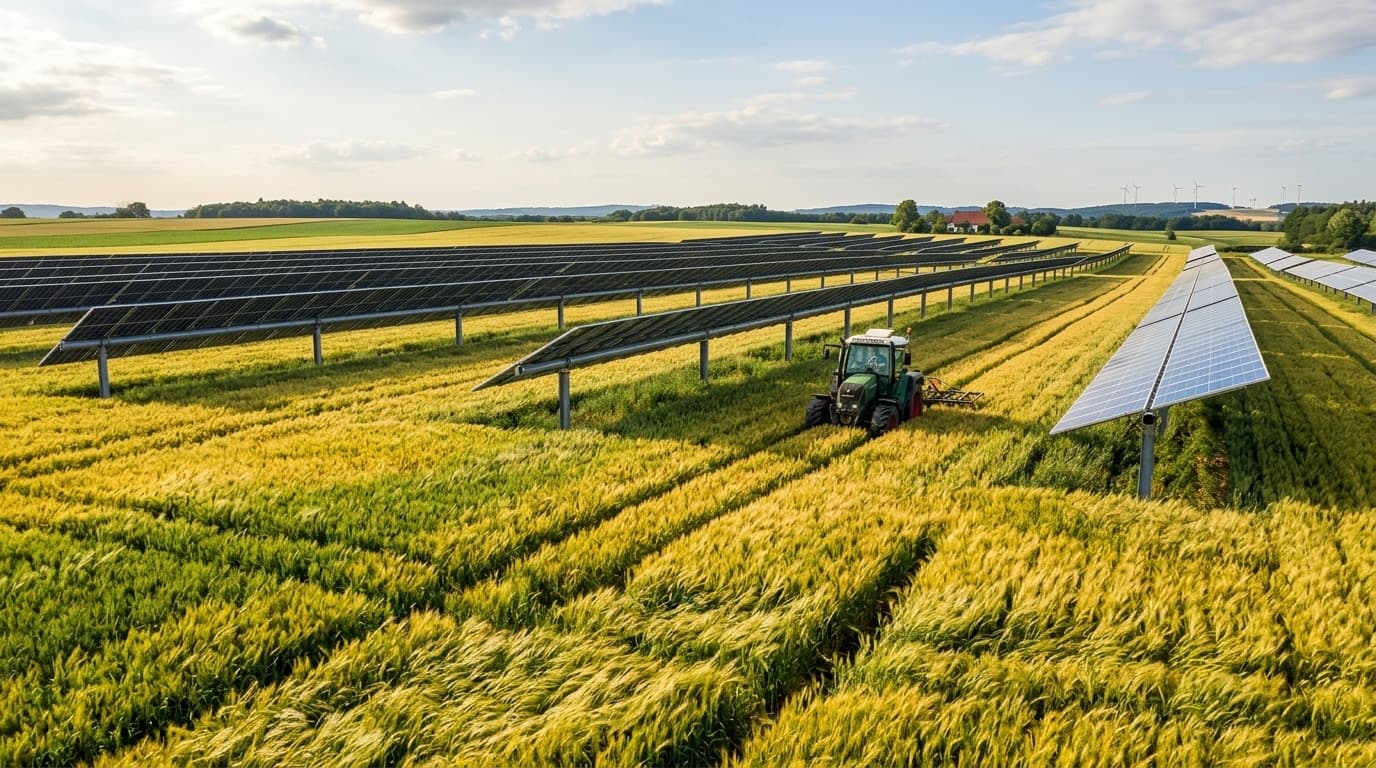
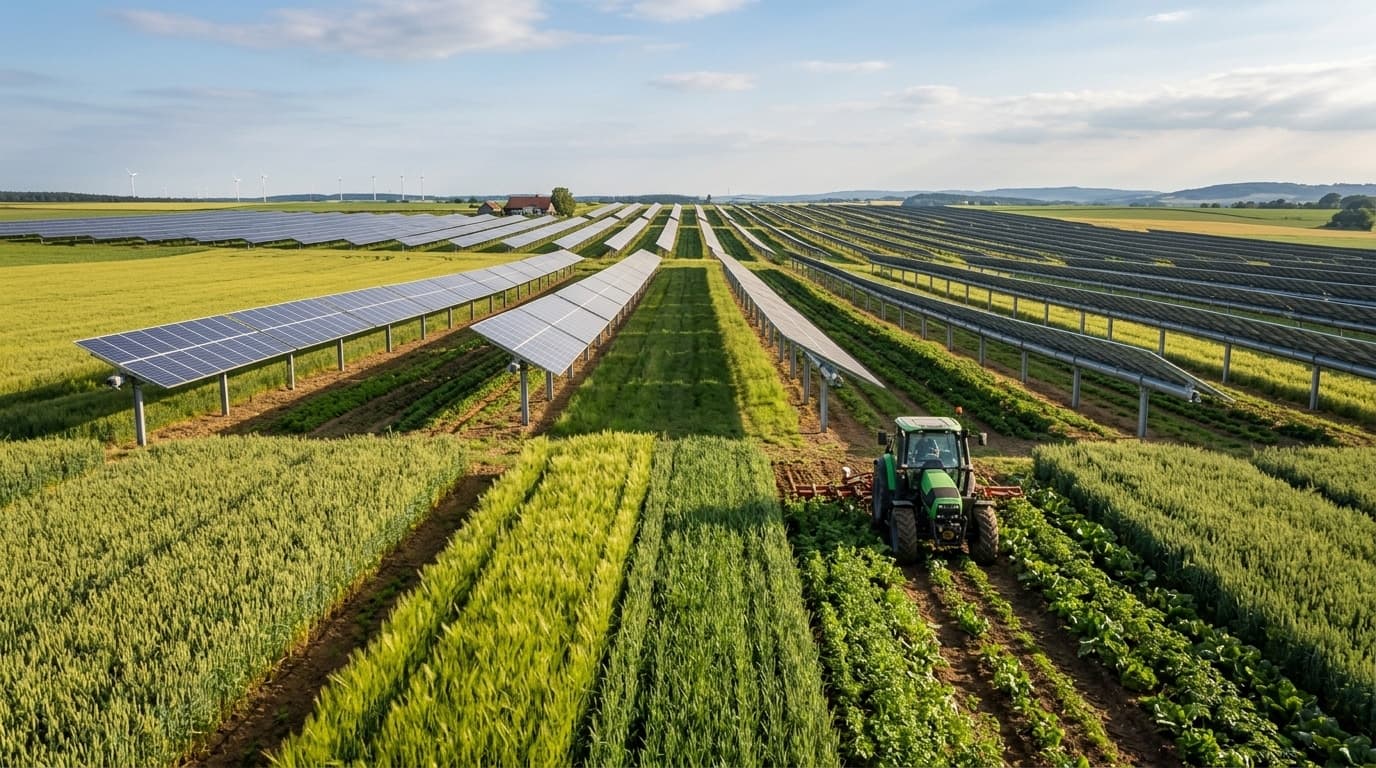
Agri-Photovoltaics (Agri-PV) is the simultaneous use of agricultural land for food production and electricity generation via solar installations.

Investment costs are EUR 450-700/kWp depending on system and size. Levelised cost of electricity (LCOE) is 4-6 ct/kWh, EEG tariff 6.66 ct/kWh. Equity returns are typically 14-20%.

Yes, Agri-PV is CAP-compliant. Your land remains recognised as agricultural, direct payments and agri-environmental measures are preserved. Plus up to EUR 500/ha extra CAP subsidy.

From 1 hectare Agri-PV is generally possible, ideal from 2 hectares. For privileging under Section 35 BauGB the limit is 2.5 hectares.

Yes, via development planning or privileging under Section 35 BauGB (up to 2.5 ha). DoppelErnte guides you through the entire permitting process.

Crop yield is preserved at 85-95% depending on the system. Elevated systems allow full mechanical cultivation. Modules also protect from hail, frost and extreme weather.

8-12 months until building permit. After permitting, typical construction time is 2-4 months.

(6.66 ct/kWh), subsidy (up to EUR 500/ha extra), possibly KfW loans. Financing models with 15% equity and 85% debt are possible.

Yes, with the DoppelErnte DIY package. You get checklists, guides, 3D visualisation and weekly advisory meetings for independent project development.

Reference

Agri-PV Glossary

From "mounting systems" to "bid value" — our glossary explains all the important technical terms around Agri-Photovoltaics clearly and practically.

To the glossary
Agri-PVBifacial ModulesEEGFeed-in TariffCAPDIN SPEC 91434

Is Your Land Suitable?

Find out with our free feasibility analysis – in just a few minutes.

Check Your LandRequest consultation

Free and without obligation. We will get back to you within 2 business days.

What does an Agri-PV installation cost? How does the profitability calculation look? Up to EUR 80,000/ha revenue.

Learn more

Permitting & Law

Building permit, EEG application, CAP subsidy, environmental impact assessment — what you need to know.

Learn more

Technology & Partners

Schletter, Ideematec, Fraunhofer ISE — which technologies and systems do we use?

Learn more

Case studies

Real projects, real results. Learn how other farmers benefit from Agri-PV.

Learn more

EnergyExperts Platform

Our digital platform for professional Agri-PV project development. 30x faster project assessment.

Learn more
EEG
feed-in tariff
CAP

Knowledge & News

Latest articles and news about Agri-Photovoltaics.

Doppelnutzung von Fläche: So funktioniert Agri-PV wirklichFachwissen

Doppelnutzung von Fläche: So funktioniert Agri-PV wirklich

Die Doppelnutzung von Fläche bei Agri-PV ermöglicht es, Landwirtschaft und Photovoltaik auf derselben Fläche zu betreiben. Dies sichert die landwirtschaftliche Hauptnutzung und erzeugt gleichzeitig...

12. Juni 2026|11 Min. Lesezeit
Agri-PV vs. Freiflächen-PV: Was ist wirtschaftlicher?Fachwissen

Agri-PV vs. Freiflächen-PV: Was ist wirtschaftlicher?

Agri-PV ist in Deutschland 2026 in der Regel teurer in der Errichtung als Freiflächen-PV. Die Hauptgründe sind die komplexere Installation und die Anforderungen an die landwirtschaftliche Nutzung. ...

12. Juni 2026|13 Min. Lesezeit
Agri-PV Ernteerträge: Studien und Praxis im VergleichFachwissen

Agri-PV Ernteerträge: Studien und Praxis im Vergleich

Agri-PV Ernteerträge zeigen im Jahr 2026, dass Ernteerträge stabil bleiben oder in trockenen Jahren sogar steigen können. Diese Technologie kombiniert Landwirtschaft mit Photovoltaik, indem sie Son...

8. Juni 2026|16 Min. Lesezeit
Agri-PV: Schritte zur eigenen Agri-PhotovoltaikanlageFachwissen

Agri-PV: Schritte zur eigenen Agri-Photovoltaikanlage

Der erste Schritt zur eigenen Agri-Photovoltaikanlage ist die Einhaltung der DIN SPEC 91434, um die Genehmigungsfähigkeit zu gewährleisten. Die Relevanz von Agri-PV ergibt sich aus der Möglichkeit,...

5. Juni 2026|14 Min. Lesezeit
Was kostet Agri-PV? Rechenbeispiel für LandwirteFachwissen

Was kostet Agri-PV? Rechenbeispiel für Landwirte

Die Kosten für Agri-PV-Anlagen in Deutschland liegen im Jahr 2026 oft 20-40 % über denen konventioneller Freiflächenanlagen. Bei Spezialkulturen oder hochaufgeständerten Systemen kann der Aufpreis ...

3. Juni 2026|16 Min. Lesezeit
Agri-PV in Deutschland: Neue Potenziale, Kosten und FörderungFachwissen

Agri-PV in Deutschland: Neue Potenziale, Kosten und Förderung

Agri-PV in Deutschland bietet 2026 ein theoretisches Potenzial von bis zu 500 GW, mit einem technischen Gesamtpotenzial von bis zu 7.907 GW. Dieses enorme Potenzial ergibt sich aus der Möglichkeit,...

1. Juni 2026|15 Min. Lesezeit
Show all articles (7 posts)